Project Study Case
The Problem
The Proposal
The Architecture
Solution Highlights
One view for everything.
The technique for making this is:
- Drag and Drops to prevent cognitive overhead
- All the interactions except payment can be done by mouse
- Right-click menu to solve edge cases easily
- Three-clicks to anything.
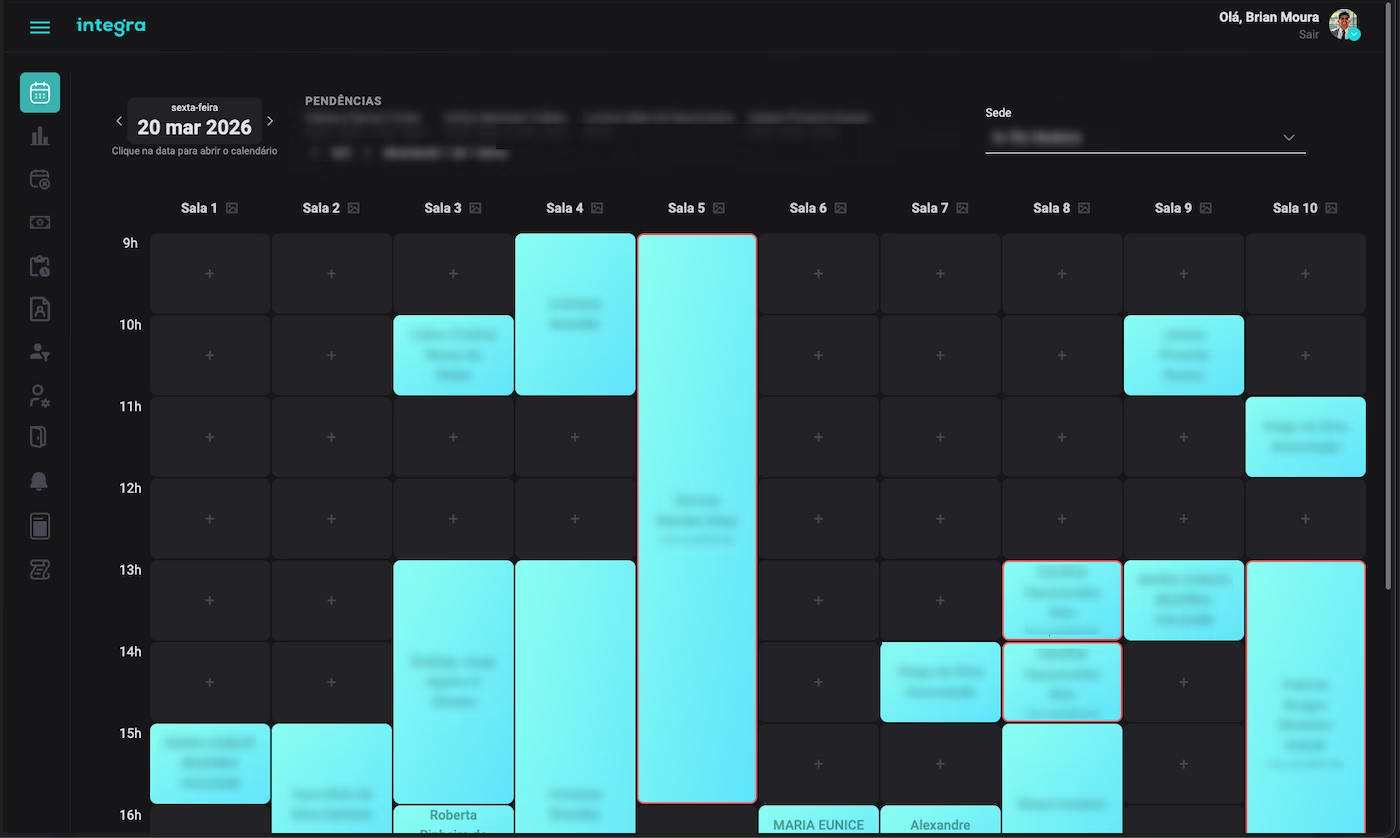
Performance: 400ms to populate the whole system.
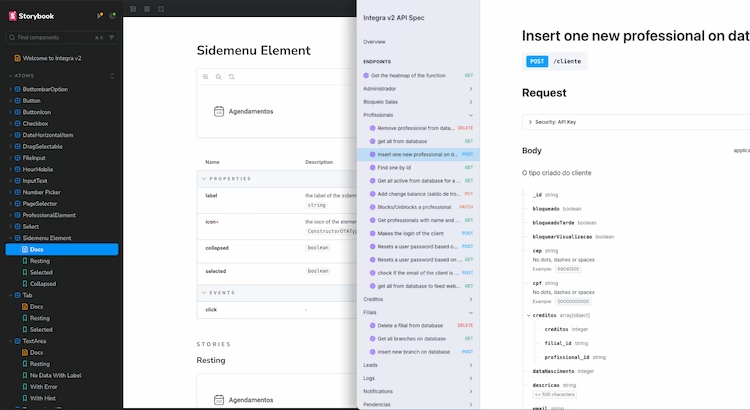
Maintenance Heaven
Results
No lines, no chaos.
- Eliminated waiting lines caused by scheduling errors and delays.
- Removed front-desk bottlenecks by enabling instant scheduling and updates.
- Cut unnecessary back-and-forth communication to near zero.
Bulletproof Scheduling
- Zero double-bookings, even during peak usage.
- Real-time availability guarantees every visible slot is valid and bookable.
- Clear and enforced booking states eliminated operational and financial inconsistencies.
From Minutes to Seconds
- Zero double-bookings, even during peak usage.
- Real-time availability guarantees every visible slot is valid and bookable.
- Clear and enforced booking states eliminated operational and financial inconsistencies.
Real Impact on the Ground
- Professionals no longer depend on reception, they control their own schedules.
- Patients move through the clinic faster, with fewer delays and friction.
- The clinic operates with a predictable, continuous flow instead of interruptions and queues.
Future Improvements
Professional Experience Upgrade (Improves UX)
- Personal analytics dashboard with revenue (weekly/monthly) and occupancy rate
- One-click rebooking of past schedules
- Calendar sync (Google Calendar, iCal)
- Mobile-first experience / PWA
Intelligent Scheduling Layer (AI Integration)
- AI-Assistant for Receptionists: A real-time assistant to executing actions and answer questions
- Categorization & Auto-tagging of patterns in appointments.
- Automate Dashboard creation charts with AI.
- AI/Statistic chance of no-show or cancelling.